Module 01
Biblical Foundations of Christian Apologetics
The scriptural mandate to defend the faith, how Jesus and the apostles modelled it, and the development of apologetics through church history.


Enrolling now · October 2026 cohort
Live classes begin 5 October 2026 · 7:30 PM IST
The October 2026 cohort has begun. Contact the seminary office about the next intake.
Register nowThe program
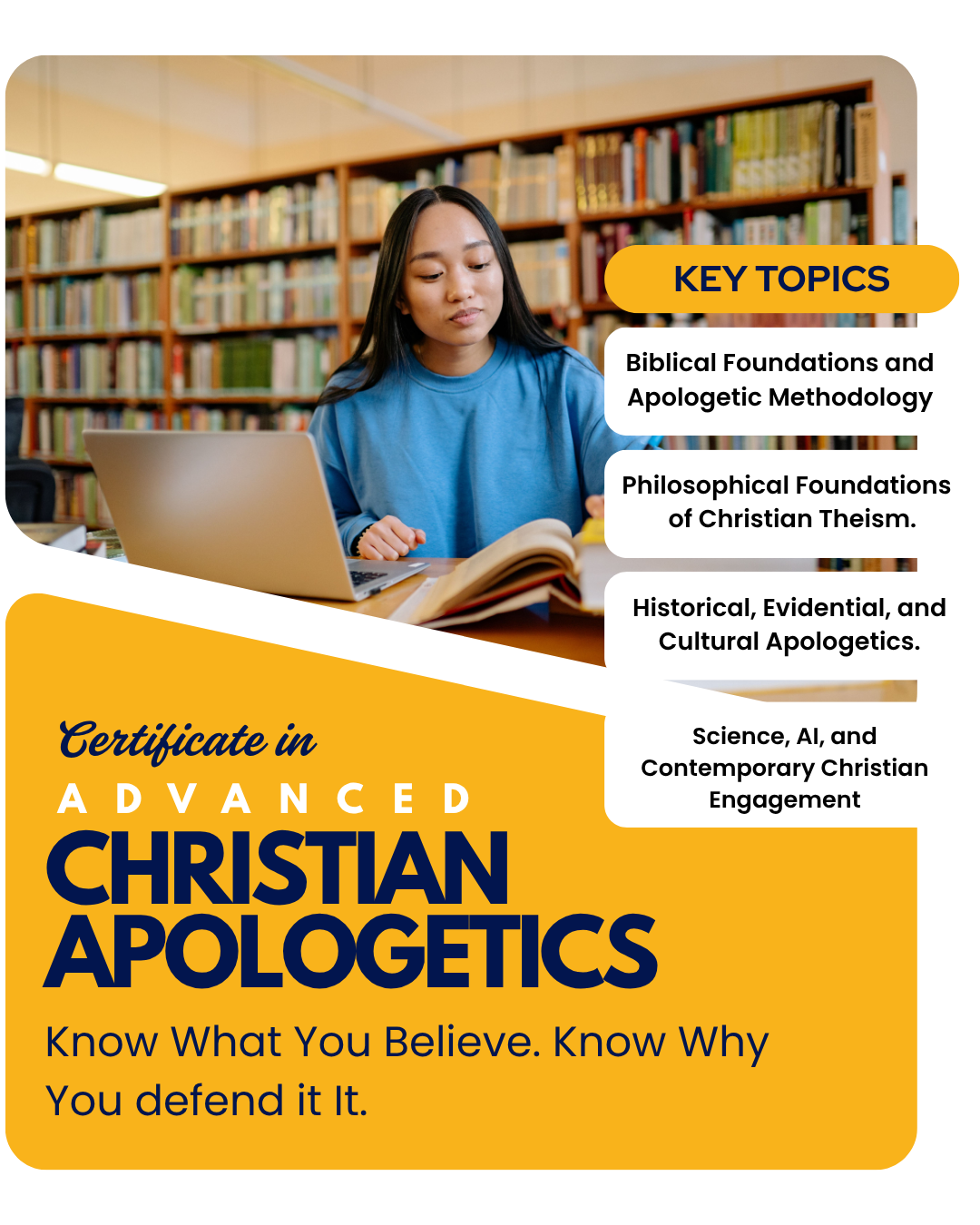
Twelve sequential modules build progressively on one another. You begin with the scriptural basis for apologetics and its methods, move through epistemology, metaphysics, and natural theology, examine the historical reliability of Scripture and the resurrection, and finish with science, origins, and emerging technology. The result is one coherent framework — biblical conviction, logical reasoning, historical awareness, and Christlike character held together.

Rigorous, not casual
Twenty-four weeks of structured, university-style study — foundational principles through to advanced engagement, prepared for challenges inside and outside the church.
Built for working people
Live classes only on Mondays and Fridays, 7:30–9:30 PM IST. Every material is on Google Classroom for self-paced study and peer discussion around your job.
No exams, no grades
There are no assessments. Participants come out of a genuine desire to grow, not a fear of failing — a stress-free environment focused on real understanding.
Accessible
Tuition is ₹7,800 in total — ₹1,300 a month for six months — with flexible monthly payment for those who genuinely need it.
The curriculum
Four stages, twelve modules, two weeks each. Every stage assumes the one before it — by Stage IV you are integrating philosophy, history, and science into a single cumulative case. Open a stage to see its modules.
Module 01
The scriptural mandate to defend the faith, how Jesus and the apostles modelled it, and the development of apologetics through church history.
Module 02
Classical, evidential, presuppositional, cumulative-case, and conversational approaches — plus logic, critical thinking, and spotting fallacies.
Module 03
Competing worldviews, theories of truth and knowledge, and the relationship between faith, reason, and evidence.
Module 04
Being, causation, and the divine attributes, then the cosmological, design, ontological, and moral arguments for God.
Module 05
The image of God, consciousness and personal identity, and the major Christian responses to moral evil, natural evil, and divine hiddenness.
Module 06
The nature of miracles, Hume's critique, providence and prayer, and the cumulative philosophical case for the God of Scripture.
Module 07
General and special revelation, inspiration and authority, canon formation, manuscripts, textual criticism, and archaeology.
Module 08
The historical sources for Jesus, his claims, and the evidence for the crucifixion, empty tomb, and appearances — with the alternative theories weighed.
Module 09
The distinct claims of the gospel, Christianity among world religions, and thoughtful responses to objections from skepticism.
Module 10
Secularism, moral relativism, and digital culture — and building the cumulative case from philosophical, historical, experiential, and moral evidence.
Module 11
The nature and limits of science, its history with Christianity, cosmology and fine-tuning, and the main contemporary views on origins.
Module 12
Artificial intelligence and personhood, biotechnology and transhumanism, neuroscience and human freedom — assessed through a Christian worldview.
How it works
The program is built for holistic growth — you are taught directly, you test ideas with peers, and you study on your own, every week.
01
Live, engaging sessions twice a week with teachers who work in ministry, pastoral care, and apologetics.
02
Discussion forums where you bring real conversations, test arguments, and learn from fellow students across the country.
03
Curated readings and materials on Google Classroom, available around the clock for your own study and reflection.
In their words
Pastors, teachers, and working believers who have been through the program.
I came in able to quote verses but not to reason through them. By the historical stage the case for the resurrection finally held together — and I could walk someone else through it.
My students ask about science and AI, not about the 1600s. Modules 11 and 12 gave me language I actually use on a Monday morning.
Two evenings a week around a full-time job. It was demanding in the right way — I was reading philosophy I would never have picked up on my own.
The methodology module changed how I have hard conversations — fewer arguments won, more people still willing to keep talking.
Each stage assumed the last one. By the end I was not holding four subjects — I was holding one cumulative case for the faith.
Outcomes
By the end of the certificate you move from a passive believer to an informed, articulate ambassador — able to teach it, mentor others in it, and hold it in public.
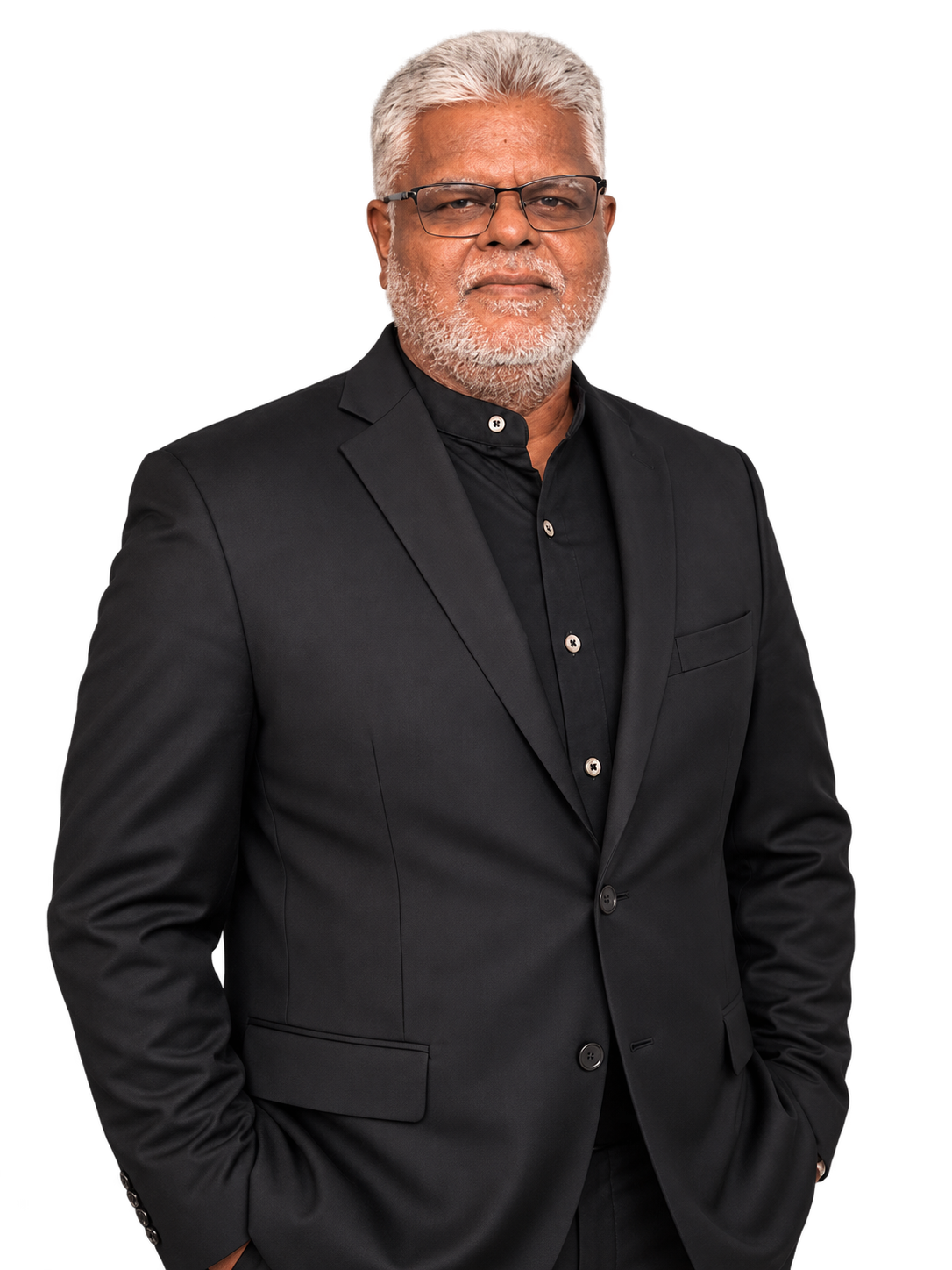
Meet our Facultys
Four teachers carry the four stages of the course — from the biblical mandate to defend the faith through to the frontiers of science and technology.

Module - 1

Module - 2
Module - 3

Module - 4
Enrolment
Registration for the October 2026 cohort is open.
The seminary office will confirm your place and send the payment schedule, usually within two working days. Questions in the meantime? Message us on WhatsApp.
Questions
This is a rigorous, systematic curriculum that takes you from foundational principles to advanced engagement. Over 24 weeks you work through the biblical, philosophical, historical, and scientific dimensions of the faith — a comprehensive education that prepares you for intellectual challenges both inside and outside the church.
Live classes are held only twice a week — Mondays and Fridays, 7:30–9:30 PM IST — which suits people with day jobs. All course materials are uploaded to Google Classroom, so you can do the reading, self-study, and peer discussion at your own pace.
Direct instructor learning through live sessions with expert teachers; peer learning in discussion forums where you test ideas with fellow students; and self-learning from curated materials available 24/7. Together they build deeper retention and practical application.
Yes. The curriculum is practical, not only theoretical. In Modules 2 and 10 you learn conversational apologetics — asking thoughtful questions, listening actively, and responding with gentleness and respect — so you can handle objections from skeptics, atheists, and other worldviews in a persuasive and Christlike way.
No. There are no assessments or exams. This is education for the sake of building the Kingdom, not for grades. We expect participants to take part out of a genuine desire to grow — a stress-free environment focused on true learning and spiritual development.
Modules 11 and 12 address science, origins, and technology directly — including AI, transhumanism, and neuroscience. You learn to evaluate these topics through a biblical lens, recognising the complementary relationship between scientific inquiry and biblical revelation.
There is no admission fee and no registration fee. The only cost is tuition — ₹7,800 in total, or ₹1,300 per month for six months. Flexible monthly payment options are available for those who genuinely need them, so finances need not be a barrier.
Critical thinking, the ability to identify logical fallacies, and the competence to construct sound arguments. You also develop communication skills tailored for apologetic dialogue — in ministry, education, evangelism, or public engagement — so you can articulate truth with clarity and humility.
On completion you can integrate biblical theology, philosophy, and history into a coherent framework. That strengthens your own faith and equips you to mentor others, teach with confidence, and engage in public discourse — moving from a passive believer to an active, informed ambassador for Christ.
Rather than relying on a single argument, you learn to integrate multiple lines of evidence — philosophical, historical, experiential, and moral — into one defence of the faith (Module 10). The result is more resilient, well-rounded, and persuasive, and much harder to refute.
Six months. Twelve modules. One coherent defence of the faith.
Register now